AI Personal Trainer
Monday, December 29, 2025
Can an AI Personal Trainer Replace a Real Coach?
Can AI replace a personal trainer? Compare AI fitness trainers vs real coaches, including cost, accountability, and best use cases.
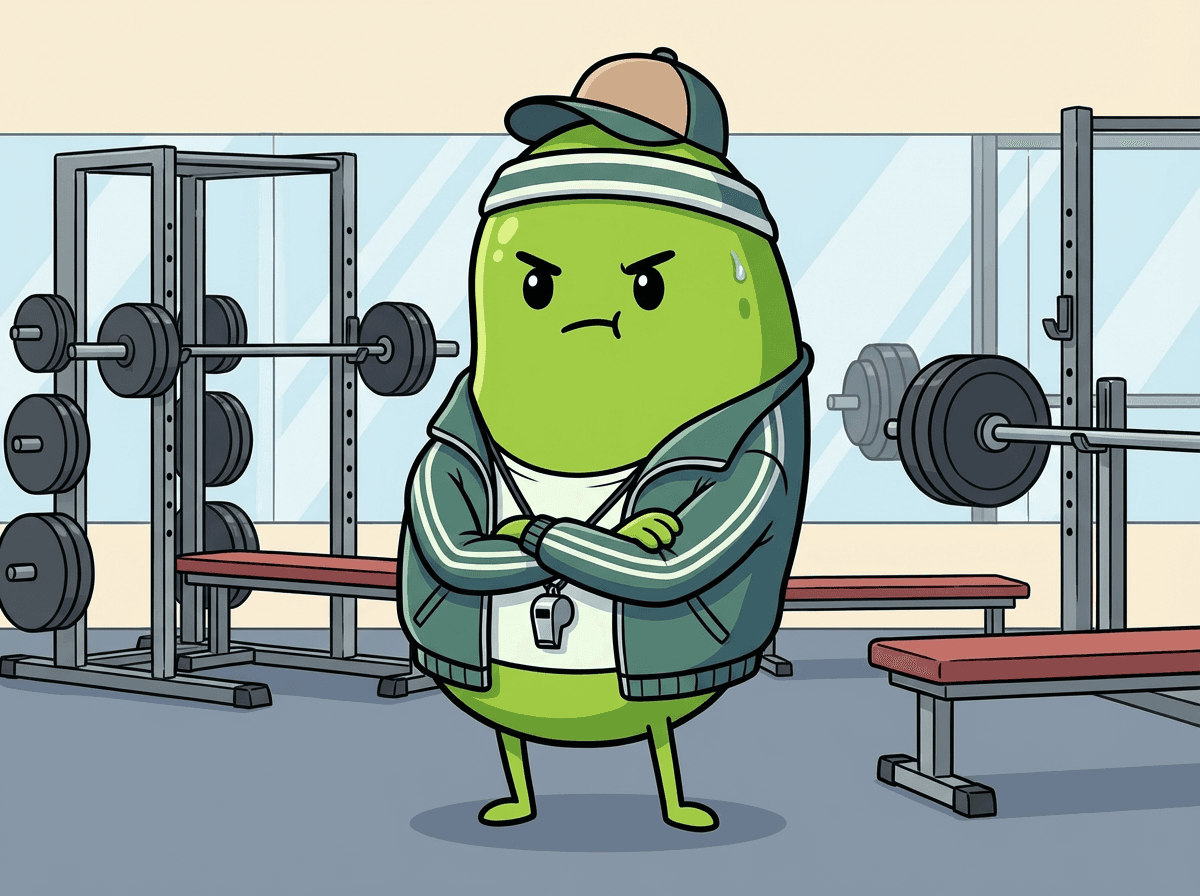
If you train consistently—3 to 6 days a week—you’ve probably wondered whether you actually need a coach anymore. With smarter apps, adaptive programs, and constant progress tracking, the question comes up more and more:
Can AI replace a personal trainer?
The rise of the AI personal trainer apps has changed how gym lifters plan workouts, track progress, and stay consistent. But replacing a real personal trainer or human fitness coach is a big claim—and one that deserves a clear, honest breakdown.
This article looks at what real coaches do, what AI fitness trainers can (and can’t) do, and whether AI is a replacement—or just a powerful tool.
What Does a Real Personal Trainer Actually Do?
A real personal trainer brings more to the table than just a workout plan. At their best, they combine technical knowledge with human judgment.
Programming
A human coach:
Designs programs based on goals, experience, and limitations
Adjusts training based on performance and context
Makes judgment calls when life stress, fatigue, or motivation dips
Good programming isn’t just reps and sets—it’s timing, progression, and restraint.
Form Correction
This is a major advantage.
A human fitness coach can:
Watch lifts in real time
Cue technique during the set
Prevent bad habits from forming
For compound lifts, this matters a lot—especially for beginners.
Accountability
Knowing someone is watching changes behavior.
Human coaches provide:
External pressure to show up
Check-ins that go beyond data
Real consequences for skipping sessions
Motivation and Feedback
A coach can read tone, body language, and mindset—things software can’t fully capture.
What an AI Personal Trainer Can and Can’t Do
An AI personal trainer works differently. It doesn’t rely on intuition—it relies on data.
What AI Does Well
Adaptive programming
AI fitness trainers adjust training based on:
Logged workouts
Progress trends
Training frequency
Missed sessions
This means no static plans and fewer plateaus caused by poor progression.
Data-driven adjustments
AI gym trainers excel at:
Managing volume over time
Adjusting intensity automatically
Spotting trends humans might miss
Scalable structure
Once set up, an AI workout planner provides structure every session—no thinking required.
Where AI Falls Short
No real-time form correction
Limited understanding of context (sleep, stress, pain)
No emotional intelligence
Depends heavily on accurate input
AI is logical and consistent—but not perceptive.
AI Personal Trainer vs Human Coach (Side-by-Side Comparison)
Factor | AI Personal Trainer | Human Fitness Coach |
|---|---|---|
Cost | Low to moderate | High (ongoing) |
Personalization | Data-driven | Experience + intuition |
Accountability | Habit-based | Emotional + social |
Accessibility | 24/7 | Scheduled |
Form correction | ❌ Limited | ✅ Real-time |
Best use case | Structure & consistency | Technique & nuance |
This comparison highlights the key difference: AI scales structure, humans handle nuance.
Where AI Personal Trainers Work Best
AI-based personal training tools aren’t a gimmick—they’re just better suited to certain lifters.
Beginners
Need structure
Don’t know how to program
Want confidence walking into the gym
AI removes confusion without overwhelming detail.
Intermediate Lifters
Consistent but plateaued
Overthinking programming
Want progression without hiring a full-time coach
AI shines here by managing progression and volume.
Busy Schedules
Irregular training times
Missed sessions
Limited planning bandwidth
AI adapts instead of punishing inconsistency.
Consistency-Focused Training
For lifters who struggle with:
Decision fatigue
Program hopping
Overtraining
An AI-powered trainer creates stability.
Many lifters use an AI personal trainer as a planning and tracking system—rather than a motivational tool.
Where AI Still Falls Short
There are clear limits to what AI can replace.
Technique Coaching
If your squat depth, bar path, or bracing is off, AI can’t see it.
This is where real-time coaching still wins.
Injury Management
AI fitness tools are not built for:
Rehab
Pain diagnosis
Complex physical limitations
A human coach—or medical professional—is essential here.
Elite or Competitive Goals
Advanced athletes need:
Highly specific programming
Technical refinement
Strategic peaking
AI can assist, but not lead.
Emotional Accountability
AI reminders aren’t the same as disappointing a real person.
For some lifters, that difference matters.
Can AI and Human Coaching Work Together?
Yes—and this is becoming the most realistic model.
A hybrid approach looks like this:
AI personal trainer handles day-to-day programming
Human coach provides form checks, reviews, or periodic check-ins
This setup:
Reduces cost
Maintains structure
Adds human insight where it matters most
Many lifters also explore related topics like AI vs human coaching or broader AI fitness tools to understand how these systems fit together.
What the Evidence Suggests
While AI fitness is still evolving, AI fitness research supports some of its strengths.
Research published in JMIR mHealth and uHealth suggests that personalized, adaptive digital fitness programs improve user adherence compared to generic plans.
Reviews in Frontiers in Digital Health highlight that app-based coaching systems help users maintain consistency, especially for non-elite populations.
Broader behavior-change research from organizations like American College of Sports Medicine supports structured programming and self-monitoring as key drivers of long-term training success.
The takeaway: structure + feedback improves consistency, even without a human present.
So, Can AI Replace a Personal Trainer?
Short answer: no—not completely.
Longer, more accurate answer: AI doesn’t replace a real personal trainer; it replaces the need to program blindly.
AI personal trainers are excellent at:
Planning
Adapting
Tracking
Supporting consistency
Human coaches are essential for:
Technique
Nuance
Injury-related decisions
High-level accountability
For most beginner-to-intermediate gym lifters, AI acts as a force multiplier, not a replacement.
Final Thoughts
So, can AI replace a personal trainer?
If you’re asking whether AI can fully replace human coaching in every scenario—the answer is no.
If you’re asking whether AI can replace guesswork, inconsistency, and poorly designed plans—the answer is yes.
AI personal trainers are best seen as:
A planning system
A consistency tool
A long-term training framework
Used correctly, they help lifters train smarter—not magically.
Disclaimer: AI fitness tools provide general training guidance only and are not medical advice. They do not diagnose, treat, or prevent injury or medical conditions.
If your goal is steady progress, better structure, and fewer plateaus, understanding how AI and human coaching complement each other is the smartest place to start.
Related articles
Check out related articles on AI fitness tools, workout plans, and smarter ways to train.