AI Personal Trainer
Monday, December 29, 2025
How AI Personal Trainers Create Personalized Workout Plans
Learn how AI personal trainer workout plans are created, how they adapt over time, and how they compare to traditional gym programs.
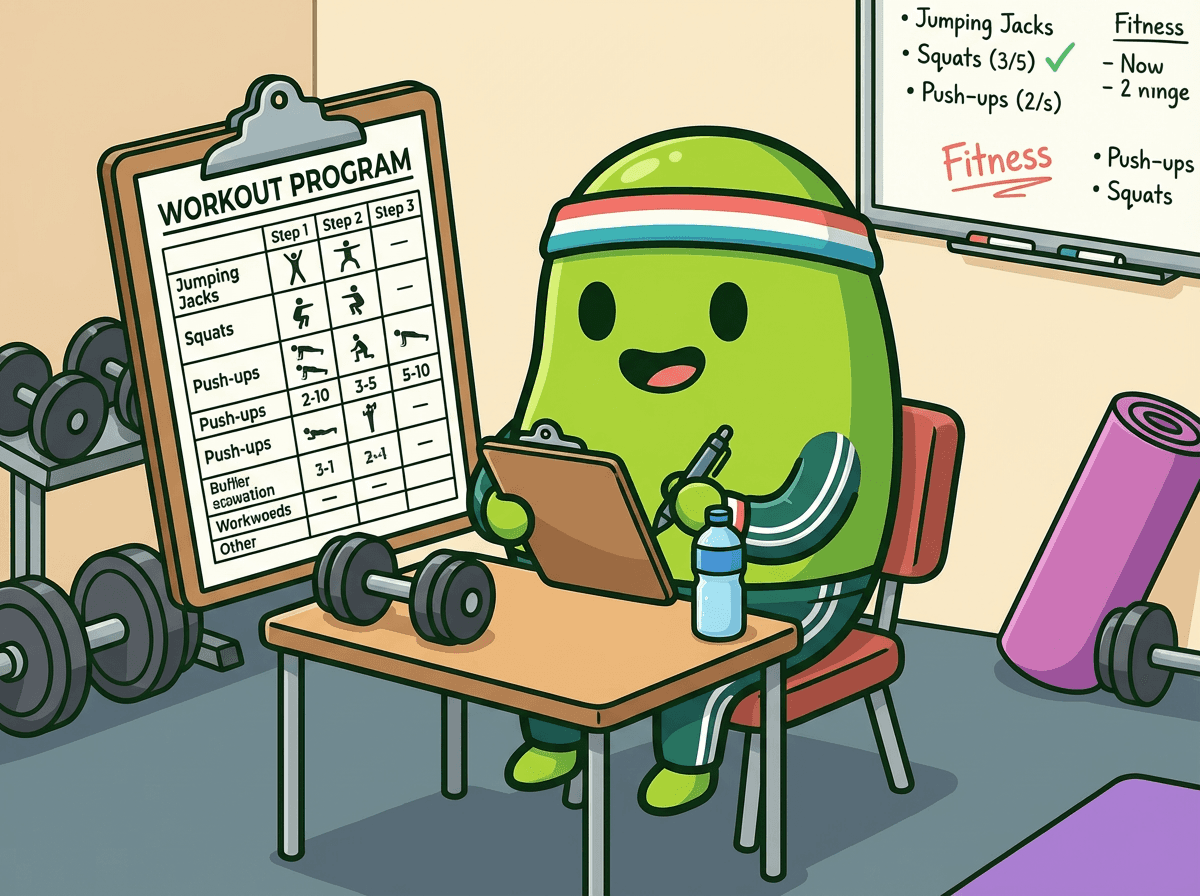
If you’ve ever followed a generic workout PDF, you already know the problem: it looks good on paper, but real life gets messy. Missed sessions, stalled lifts, changing goals—static programs don’t adapt.
That’s where AI personal trainer workout plans come in.
Instead of handing you a fixed routine, an AI-powered trainer builds, adjusts, and refines your workouts based on you: how you train, how often you show up, and how your body responds over time.
This article breaks down how AI personal trainers actually create personalized workout plans, how they adapt them, and where they fit (and don’t fit) into modern gym training.
What Are AI Personal Trainer Workout Plans?
AI personalized training are dynamic training programs generated and adjusted by software, not written once and forgotten.
At a high level, an AI personal trainer:
Collects information about you and your training
Builds an initial program using predefined training logic
Adjusts the plan over time using your performance data
How They Differ From Static Gym Programs
Static programs:
Fixed exercises, sets, and reps
Same plan regardless of progress or missed sessions
Require manual changes
AI-generated plans:
Adapt automatically
Change based on performance trends
Scale with your experience level
Think of AI plans as living systems, not templates.
What Data AI Personal Trainers Use
Personalization starts with inputs. The quality of an AI fitness trainer depends heavily on the data it receives.
Training Experience
Most systems ask whether you’re:
A beginner
Early intermediate
Intermediate
This affects:
Exercise complexity
Volume tolerance
Progression speed
Goals (Muscle, Fat Loss, Strength)
Your goal shapes:
Rep ranges
Rest periods
Exercise selection
Weekly volume
An AI gym trainer won’t program the same way for hypertrophy as it would for strength-focused training.
Schedule & Availability
How many days you train—and how long each session lasts—matters.
AI systems adjust:
Weekly splits
Session density
Exercise prioritization
Equipment Access
Home gym vs commercial gym changes everything. AI plans adapt around:
Barbells vs machines
Limited vs full equipment
Travel or time constraints
Workout History & Performance
This is where personalization compounds.
AI tracks:
Weights used
Reps completed
Missed sessions
Trends over time
The more consistently you log, the smarter the plan becomes.
How AI Workout Planners Build Initial Programs
An AI workout planner doesn’t start from scratch—it follows established training principles, then personalizes them.
Exercise Selection
AI chooses exercises based on:
Goal relevance
Equipment availability
Training experience
Beginners often see simpler movements. Intermediate lifters get more variation and volume distribution.
Volume & Intensity Logic
Volume isn’t random.
AI uses rules around:
Weekly set targets per muscle group
Rep ranges tied to goals
Load progression strategies
This helps avoid common issues like overtraining or under-stimulating muscles.
Weekly Splits
Based on availability and goals, AI might generate:
Full-body routines
Upper/lower splits
Push/pull/legs
The split isn’t trendy—it’s practical.
Beginner vs Intermediate Logic
AI personal trainers usually:
Increase volume gradually for beginners
Manage fatigue more carefully for intermediates
Adjust progression speed based on response
This prevents doing “too much too soon."
How AI Personal Trainers Adapt Workout Plans Over Time
Adaptation is the core value of AI.
Progressive Overload
If lifts are improving, the system may:
Increase load
Add reps
Adjust volume
Progression isn’t forced—it’s earned.
Missed Workouts
Miss a session? AI doesn’t punish you.
Instead, it may:
Shift volume later in the week
Reduce intensity temporarily
Rebalance upcoming sessions
This keeps training sustainable.
Plateaus
When progress stalls, AI can:
Change rep ranges
Adjust exercise selection
Modify volume or frequency
Plateaus become signals, not failures.
Fatigue and Recovery Signals
Some systems factor in:
Session difficulty ratings
Performance drops
Consistency changes
This helps avoid grinding into burnout.
AI Personal Trainer Workout Plans vs Traditional Programs
Static Plans vs Adaptive Systems
Static plans assume:
Perfect adherence
Predictable recovery
Linear progress
AI plans assume reality.
Human-Written Plans vs AI Logic
Human coaches use experience and intuition.
AI uses:
Pattern recognition
Data trends
Consistent rule sets
Neither is “better” universally—but AI scales logic extremely well.
Consistency and Long-Term Progression
For many lifters, the biggest win is staying consistent.
AI removes:
Decision fatigue
Constant reprogramming
Guesswork
That alone can improve long-term results.
Who Benefits Most From AI-Generated Workout Plans?
Beginners
Need structure
Want confidence
Don’t know how to program
AI simplifies without overwhelming.
Intermediate Lifters
Plateaued
Overthinking training
Want progression without hiring a coach
AI handles the boring math.
Busy Schedules
Inconsistent training days
Limited planning time
AI adapts instead of derailing progress.
Consistency-Focused Lifters
If your main struggle is sticking to a plan, AI can help more than another “perfect” program.
Many lifters use an AI personal trainer primarily as a planning and adaptation tool—not motivation.
Limitations of AI Workout Plans
AI is powerful—but not perfect.
Form Feedback
AI can’t see your squat depth or bar path in real time.
Context Awareness
Sleep, stress, and life factors only matter if you log them accurately.
Injury or Rehab Scenarios
AI fitness tools are not designed for:
Injury diagnosis
Rehab programming
Medical conditions
This is where human professionals are essential.
Are AI Personal Trainer Workout Plans Effective?
Effectiveness depends on what you measure.
Research published in JMIR mHealth and uHealth suggests that personalized, adaptive fitness programs improve adherence compared to generic plans.
Reviews in Frontiers in Digital Health show that digital coaching tools can help users maintain consistency—especially among non-elite populations.
Broader training principles supported by organizations like American College of Sports Medicine emphasize:
Progressive overload
Structured programming
Self-monitoring
AI aligns well with these fundamentals.
What AI doesn’t do is guarantee outcomes. It supports better training behavior—but effort still matters.
Final Thoughts
AI personal trainer workout plans aren’t magic—but they are practical.
They work best when you:
Train consistently
Log honestly
Want structure over hype
AI won’t replace hard work or discipline. But it will replace guesswork, static programming, and constant plan hopping.
Used correctly, AI becomes a reliable training framework—one that adapts as you do.
Disclaimer: AI fitness tools provide general fitness guidance only and are not medical advice. They do not diagnose, treat, or prevent injury or medical conditions.
If your goal is steady progress, smarter programming, and long-term consistency, understanding how AI builds and adapts workout plans is a solid place to start.
Related articles
Check out related articles on AI fitness tools, workout plans, and smarter ways to train.